Showing posts with label birds. Show all posts
Showing posts with label birds. Show all posts
Wednesday, November 9, 2011


Friday, February 13, 2009
Valentines Advice from Sage Grouse
Gail Patricelli from the University of California at Davis has discovered that to impress the ladies male sage grouse need more than a fancy dance and a big tail. The most successful males also responded to the behavior of females in subtle ways.
Groups of male sage grouse strut, inflate air sacs and make booming sounds in a complicated dance on a dancing area called a lek, while they compete for the attention of the females. Dr. Patricelli studied these behaviors with a camera ("called the fembot") disguised as female grouse. She found the few males which were successful in mating were those who were the most responsive to signals from the females.
So gentlemen, take a lesson from the sage grouse, and try a little sensitivity.
Take a look at the sage grouse display and the "Fembot" below
Groups of male sage grouse strut, inflate air sacs and make booming sounds in a complicated dance on a dancing area called a lek, while they compete for the attention of the females. Dr. Patricelli studied these behaviors with a camera ("called the fembot") disguised as female grouse. She found the few males which were successful in mating were those who were the most responsive to signals from the females.
So gentlemen, take a lesson from the sage grouse, and try a little sensitivity.
Take a look at the sage grouse display and the "Fembot" below
Sunday, December 7, 2008
Superb bird of paradise
Many of you may have watched the amazing Planet Earth show on PBS a year or so ago. I wasn't able to watch during the broadcast, but have seen several of the episodes lately and immediately saw how I could use segments in my classes. The photography is amazing. One of my favorite segments is of the birds of paradise in New Guinea.
There is a segment on You Tube of a short sequence of video taken in New Guinea of the a couple of the species of birds of paradise. The male birds of paradise have elaborate feathers and engage in a host of courtship displays. Take a look
There is a segment on You Tube of a short sequence of video taken in New Guinea of the a couple of the species of birds of paradise. The male birds of paradise have elaborate feathers and engage in a host of courtship displays. Take a look
Thursday, January 31, 2008
Feeding time, and the mountains are beautiful
 The San Gabriel Mountains have a beautiful blanket of snow left from the recent storms. The rain here has caused the native plants on the mesa to break dormancy, and many are flowering. Bladderpod, and the coast sunflower are in bloom right now along with the non native mustard.
 This male scaup along with several others was diving for mussels near the tide gate this morning. These diving ducks commonly eat fish, but were snacking on one mussel after another. After positioning them just right in their beaks, the birds swallowed the mussels whole.
 Surf scoters were also dining on mollusks this morning. The male bird above, and the female below were feeding by the walk bridge on clams. They also just swallowed the clams whole. The must have strong gizzards to be able to grind up this food.
Wednesday, January 30, 2008
Large and Small at Bolsa Chica

There was a great deal of bird activity this morning in the pocket wetlands and the nearby eucalyptus trees. An osprey was having a breakfast of what looked like some kind of ray. Grebes like this little pied-billed grebe were fishing along with mergansers, terns and egrets including the reddish egret.


Green wing and blue wing teal along with northern shovelers, northern pintails and American wigeons were dabbling in the mud.

 Male Anna's hummingbirds were zipping about and courting females. Those that have so far escaped the wall of death, that is. Parts of the wall where there is no chain link with green mesh now have caution tape attached to it as you can see from this picture.
Sunday, January 27, 2008
Windy day at Bolsa Chica
 There was a strong wind blowing from the east this morning at Bolsa Chica. This allowed this male kestrel to ride the wind while hunting for bugs, lizards or small mice.
 This female northern harrier was also up over the mesa and gliding low over rabbit island in search of prey.
 The kestrel flew directly above me several times as he hunted on the mesa.
 This young red tailed hawk was also up over the mesa looking for food. The wind made gliding easy.
Friday, December 7, 2007
Why the Glass Wall at Bolsa Chica Bothers Me So Much
Here are just a few reasons this wall does not belong at Bolsa Chica Peregrine falcons were removed from the endangered species list in 1999. Their populations are stable to declining around the nation. They are commonly seen in the eucalyptus trees on the mesa.
 Kestrels are our smallest falcon and can be commonly seen hunting near the wall.
 This Belding's savannah sparrow is an endangered species, and a resident at Bolsa Chica.
 Great blue herons nest in the eucalyptus trees on the mesa. Since they will eat anything small enough to swallow, they hunt on the mesa as well as in the wetlands.
 White tailed kites roam over the mesa and wetlands in search of food. I saw one perched on the wall eating a mouse the other evening. How long will it be before in pursuit of prey it doesn't see the wall?
 Black skimmers fly low over the water to hunt and migrate to Bolsa Chica to breed in the summer.
  This is an elegant tern. Thousands of them nest at Bolsa Chica in the summer. They arrive in April or so and leave in the fall.
 Peregrine falcons were removed from the endangered species list in 1999. Their populations are stable to declining around the nation. They are commonly seen in the eucalyptus trees on the mesa.
 Kestrels are our smallest falcon and can be commonly seen hunting near the wall.
  This Belding's savannah sparrow is an endangered species, and a resident at Bolsa Chica.
  Great blue herons nest in the eucalyptus trees on the mesa. Since they will eat anything small enough to swallow, they hunt on the mesa as well as in the wetlands.
  White tailed kites roam over the mesa and wetlands in search of food. I saw one perched on the wall eating a mouse the other evening. How long will it be before in pursuit of prey it doesn't see the wall?
 Black skimmers fly low over the water to hunt and migrate to Bolsa Chica to breed in the summer.
  This is an elegant tern. Thousands of them nest at Bolsa Chica in the summer. They arrive in April or so and leave in the fall.
Decals Going Up on Wall of Death
 This afternoon when Carrie and I were out at the wall we saw a worker applying two decals per pane. The instructions on the packaging for this product suggests one decal for every 3 square feet. Two per pane isn't sufficient. However, by putting them on the wall, Hearthside can claim it is doing something even if it is ineffective.
 The only long term solution to this problem is to take the glass wall down.
Thursday, December 6, 2007
More Stories on the Glass Wall of Death

Wednesday, December 5, 2007
Docent training and the wall of death

The new class of docents for the Miracles of the Marsh program sponsored by the Bolsa Chica Land Trust was out at Bolsa Chica today. As part of the tour they walked along the trail by the wall of death. As Marinka Horack and two of the docents were walking along the wall they witnessed a flycatcher hit the wall. Fortunately it was only stunned at not killed. This happened around noon close to the model homes.
I met with Erin Dean today from the USFWS to give her two dead birds collected at the wall. If you see a dead bird along the trail by the glass wall at the Brighwater development, you may collect it if you follow the procedures below.
If you have a camera with you, please take a picture of the bird in place to show where it hit the wall, and include a description of the area if possible. For example how far down the trail or how far from the model homes etc.
If you have a GPS unit, GPS coordinates would be very helpful.
After collecting the bird please call the USFWS enforcement office at 310-328-1516 to report you have the bird. The office will then call me with your contact information. I have a salvage permit and am the drop point in Huntington Beach for the dead birds. I will contact you to pick up the bird you collected.
Monday, December 3, 2007
Coyote treat this morning

 The Bolsa Chica mesa is home to several coyotes, and one graced us with his or her presence this morning.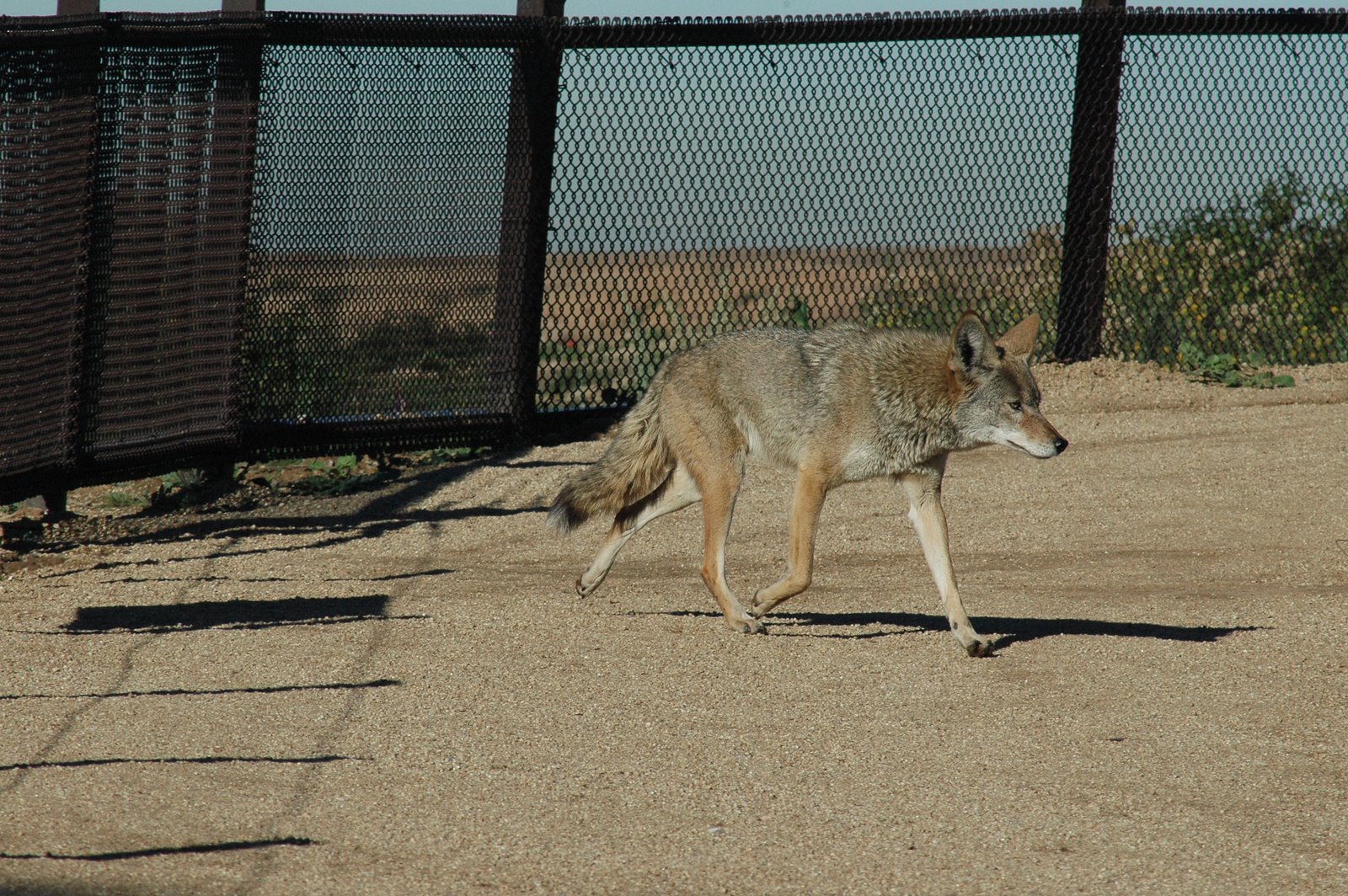
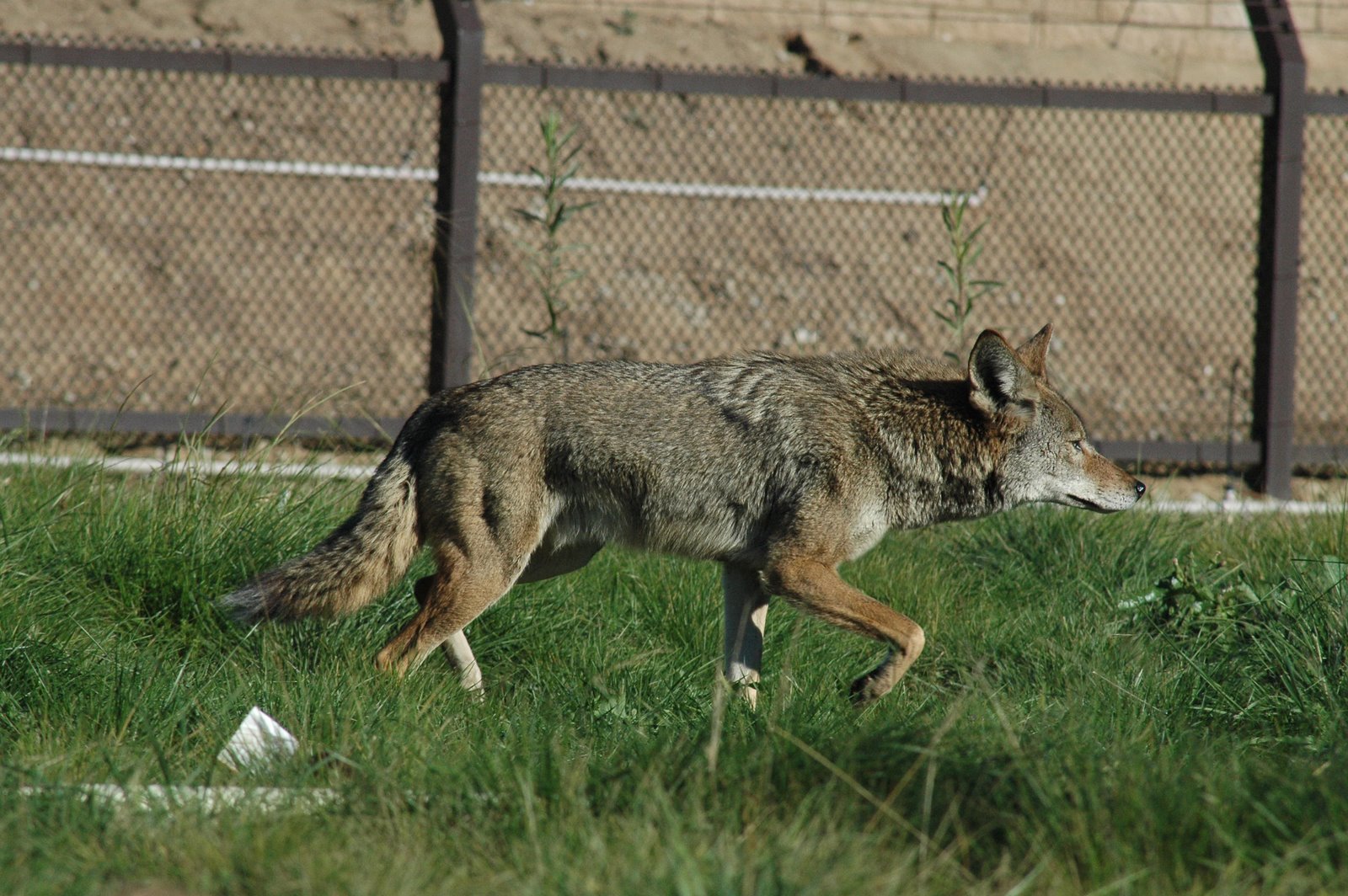
Coyotes play an important role in the Bolsa Chica ecosystem as they control predators such as the non native red fox and feral cats which are more likely to feed on ground nesting birds such as the endangered California least terns, and western snowy plovers.
Sunday, December 2, 2007
Early morning at the wall

One would think with all the condensation on the glass this morning, birds would be able to see it. However, as you can see from this picture at least one did have a collision with the wall. The pictures below show that it was near one of the model homes.


Saturday, December 1, 2007
Audubon Field Trip to the Wall

There was a nice group of folks this morning on the field trip to the glass wall of death surrounding the Brightwater development. Scott Thomas from Sea and Sage Audubon did a great job of describing the problem and bringing the group up to date.
A member of the press approached me to show him the decals on the windows. As I walked back to the main group after doing so I heard a man on the development side of the wall in a loud voice refer to us as "Wackos". He said something to the effect of "Those wackos are out there again." I didn't recognize his voice, but I would like to say to him-call us what ever you like, but remember many of us are the same "wackos" who cut the size of your development down to 350 houses or so from 4,884. Bolsa Chica means a lot more to us than the dollar signs in your eyes, and we are not going away.
Thursday, November 29, 2007
Experiment number 2

I was out at the wall early this afternoon and ran into Ed Mountford who was putting up this product on some of the glass panes. He said he ordered enough of the product to put 3 decals on each pane of the 4,400 foot long wall. I hope this helps. I haven't found any dead birds today, so it's been a good day.
AM Reflections

As you can see the reflections in the glass are a problem in the morning too. The reflections are above, and the actual scene is below.

Wednesday, November 28, 2007
Sunset reflections

I went back this evening to photograph reflections that might occur in the afternoon. Nice sunset behind the trees huh? Only problem is that the birds will think so too, only to run into the glass wall of death.
Experiment number one at Brightwater

I was out at the wall of death this morning and as you can see from the photo below, the "fix" proposed by Ed Mountford may well be a source of additional problems. The mesh over the chain link is now creating reflections of trees in the glass. So now instead of being invisible to the birds it will appear to them as though they are flying toward trees. Great.
I found the feather remains of what I think was a mourning dove by the wall this morning. Someone or something had taken the bird, but there were enough feathers left behind to indicate the bird was there.

Another Brightwater wall of death story
The local paper, The Huntington Beach Independent has an article by columnist Chris epting about the wall. You can see it at this address.
Tuesday, November 27, 2007
Blightwater

A friend of mine sent me this. I think this is a much more accurate description of the development at Bolsa Chica that "brightwater". After all the glass wall of death is a 4,400 foot long blight on the land at Bolsa Chica.
Update from the Wall of Death on the Hearthside Homes site
Due to all the pressure from the public,press, The US Fish and Wildlife Service, and conservation organizations like the Bolsa Chica Land Trust and the Audubon Society, the developer has put up a chain link fence behind the glass wall with a brown fabric over it. The only problem with this idea is that now the trees reflect into the glass and the birds will think they are flying into trees instead of flying into a glass wall.
Ed Mountford now says they will have a biologist monitor the wall and document the bird deaths. I just got back last night from out of town, and will be going out daily. I found a dead female Anna's Hummingbird a few feet from the wall this morning. She was still warm when I collected her. What were they thinking? Almost a mile of glass next to one of the most important wetland areas in Southern California does this make sense to you?.
There is a story in the Orange County Register here:
and the LA Times here:
The daily Green has an article here:
 Dead female Anna's hummingbird found this morning.
Ed Mountford now says they will have a biologist monitor the wall and document the bird deaths. I just got back last night from out of town, and will be going out daily. I found a dead female Anna's Hummingbird a few feet from the wall this morning. She was still warm when I collected her. What were they thinking? Almost a mile of glass next to one of the most important wetland areas in Southern California does this make sense to you?.
There is a story in the Orange County Register here:
and the LA Times here:
The daily Green has an article here:
 Dead female Anna's hummingbird found this morning.
Subscribe to:
Posts (Atom)